Why You Should Seal Outdoor Patio Grout
Table of Contents
- 5 Benefits of Sealing Patio Grout
- Pros and Cons of Sealing vs. Leaving Grout Unsealed
- Grout, Tile, and Paver Sealing: Which Surfaces Need What
- How to Seal Outdoor Grout Step by Step
- Choosing the Best Grout Sealer for Outdoor Use
- When to Call a Professional and How Often to Reseal Patio Grout
- Ready to Restore Your Patio Grout?
- Frequently Asked Questions
Last Updated: November 19, 2026
Outdoor patio grout takes a beating, which is why you should seal outdoor patio grout: rain soaks into the joints, sun bakes them dry, and foot traffic and spilled grill grease work their way in over time. The question homeowners ask most often is simple: does outdoor grout really need sealing? The short answer is that most cementitious grout is porous, and sealing it can help slow down staining, moisture damage and surface wear.
Grout is not a solid barrier. It is a mix of cement, sand and water, and it contains tiny pores that let liquids and dirt soak in. Unsealed grout on a covered porch might hold up for years. Grout exposed to open sky, standing water and freezing temperatures often does not.
Patio grout can start to look dingy within a season or two of heavy use, which is one more reason to understand why you should seal outdoor patio grout before staining sets in. The culprit is usually not the grout itself but what it absorbs: leaves, oil, wine, and mineral residue from sprinkler water.
5 Benefits of Sealing Patio Grout
Sealing outdoor grout gives you real, practical advantages. Here are the most important ones:
- Stain resistance. A good sealer creates a barrier so spills bead up instead of soaking in.
- Easier cleaning. Dirt and debris wipe off with a hose or mild cleaner rather than scrubbing.
- Moisture protection. Sealed grout can resist water absorption, which may help limit surface breakdown during wet seasons.
- Less efflorescence. Sealing can reduce the white mineral deposits that rise through porous grout.
- Stronger color. Many sealers deepen the grout color and help it look fresher for longer.
Watch out: Applying sealer to grout that is not fully dry or clean can trap moisture and leave a cloudy film. Let the grout cure and remove all dirt first.
Pros and Cons of Sealing vs. Leaving Grout Unsealed
Sealing is not always the right call, so weigh both sides before you start.
Pros of sealing:
- Blocks stains from oil, food and drink
- Makes routine cleaning faster
- Helps protect against weather and moisture
- Can extend the time between full restorations
Cons of sealing:
- Requires periodic reapplication
- Can alter the sheen or add a slight glossy look
- Poor application can cause a sticky or hazy finish
- Adds a step to your maintenance routine
Unsealed grout avoids the upkeep, but it stains more easily and may need deeper cleaning sooner. For a covered area with little exposure, that trade-off can be acceptable.
Grout, Tile, and Paver Sealing: Which Surfaces Need What
Not every outdoor surface should get the same product, and some should not be sealed at all. The decision comes down to porosity, how the surface is finished, and what the manufacturer specifies. Treat grout, tile, and pavers as three separate decisions rather than one blanket job.
Grout. Cementitious grout is a mix of cement, sand, and water with microscopic pores, so it absorbs liquids unless it is protected. A penetrating or impregnating sealer is commonly used because it soaks into the joint and leaves the surface breathable. Avoid film-forming topcoats on exterior grout lines: they can trap moisture and haze over. Epoxy grout is the exception. It is nonporous by formulation, so check the product data sheet before sealing; many epoxy grouts need only cleaning, not sealing.
Tile. The tile face and the grout line are different materials, so decide separately. Glazed porcelain and glazed ceramic are nonporous at the face and usually need no sealer; seal only the grout lines. Unglazed porcelain, quarry tile, and natural stone such as slate, travertine, and sandstone are porous and often benefit from a penetrating sealer formulated for that stone. Always confirm on the tile manufacturer’s care guide, because some stone is factory-sealed and some finishes should not be coated.
Pavers. Concrete and cement pavers are porous masonry and may need a sealer designed for masonry, which can also help control efflorescence. Clay brick pavers vary widely; dense, hard-fired units absorb little, while softer units take a penetrating masonry sealer well. Natural-stone pavers follow the stone guidance above. Polymeric sand joints are a separate case: many manufacturers advise against solvent-based sealers over fresh polymeric sand, so read the joint-sand instructions before sealing.
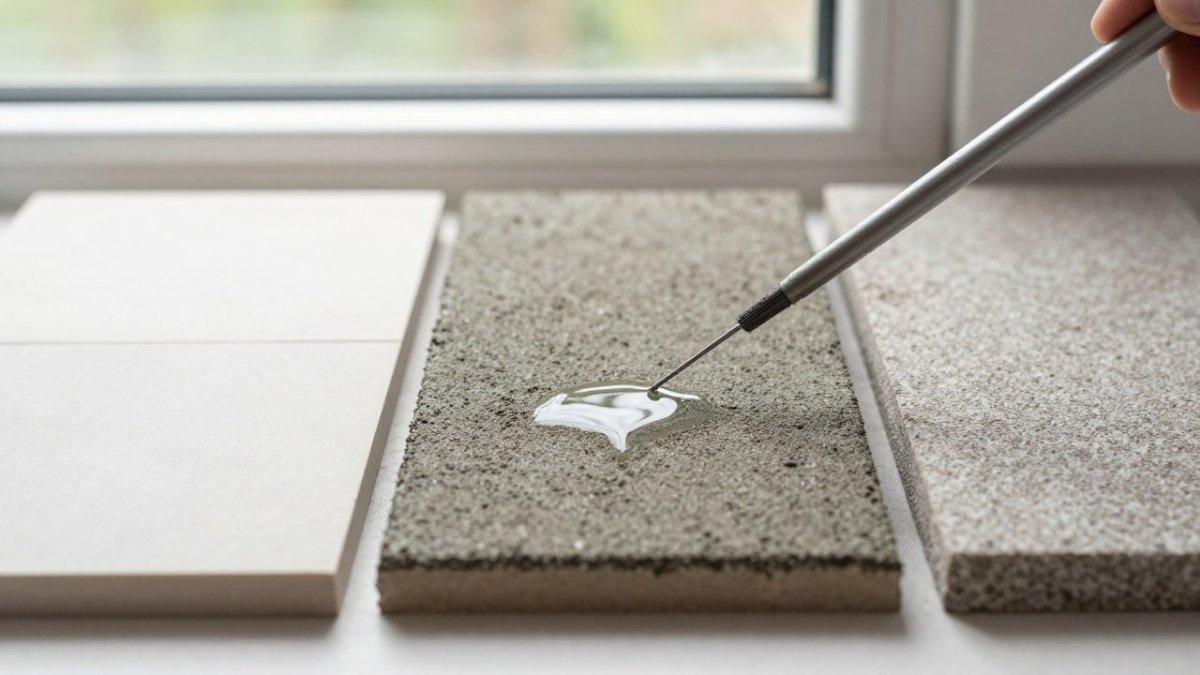
A quick decision test. Place a few drops of water on an inconspicuous spot and watch for several minutes. If the water beads and sits, the surface is already sealed or nonporous. If it darkens the material and soaks in, the surface is porous and a penetrating sealer is a reasonable candidate. Repeat the test on the grout line, the tile face, and the paver face separately, because one patio can contain all three.
Compatibility matters more than brand. A sealer made for dense stone may not bond correctly to cementitious grout, and a grout sealer is not formulated for a concrete paver face. Match the product to the material named on the label, and when a patio mixes materials, use the product specified for the most porous surface and keep it off nonporous tile faces. When in doubt, a small test patch on an out-of-the-way joint tells you more than any general claim.
How to Seal Outdoor Grout Step by Step
The steps are simple, but the timing is where most jobs fail. Grout needs to be fully cured before sealing, the sealer needs the right conditions to bond, and the patio needs to stay dry through the cure window. Follow the product label first.
- Confirm the grout is cured. New grout must cure before sealing, typically 48 to 72 hours for standard cementitious grout and longer in cool or humid weather. Sealing too early traps moisture and can cause a cloudy film or weak bond. If the grout was installed recently, check the grout manufacturer’s cure time before you start.
- Clean thoroughly and rinse. Remove dirt, algae, efflorescence, and old sealer residue with a grout cleaner and a stiff brush. Rinse well and let the surface dry. Sealer over dirt or cleaner residue will not bond evenly.
- Dry the surface completely. Wait at least 24 to 48 hours of dry weather after cleaning. Damp grout is the most common cause of trapped moisture and haze.
- Pick the conditions. Apply on a dry day with mild temperatures, generally within the range printed on the label, and no rain forecast for at least 24 hours. Avoid applying in direct sun on a hot afternoon, because the sealer can flash off before it penetrates.
- Test a small area. Seal one out-of-the-way joint and let it dry to confirm the color and sheen are acceptable before doing the whole patio.
- Apply the first coat. Use a small foam brush or applicator bottle and work the sealer into the joints. Avoid flooding the tile or paver face; excess on the face is what causes haze.
- Wipe off excess promptly. Remove sealer from the tile or paver surface right away with a clean dry cloth before it dries.
- Wait before the second coat. Let the first coat dry for the interval on the label, often 30 to 60 minutes for a penetrating sealer, then apply a second coat only if the label recommends it. Applying a second coat too soon is a common cause of sticky or uneven finish.
- Cure before use. Keep foot traffic off the area for the time listed on the label, usually several hours to a full day, and keep water off for the full cure window, which can run 24 to 72 hours depending on the product. Furniture and planters can go back after the cure time, not before.
Grout versus sealer instructions. The grout’s cure time and the sealer’s recoat and cure times are separate numbers from separate labels. Read both. A sealer applied to grout that is still curing will not perform, and a sealer applied outside its temperature range may never cure properly.
Weather windows matter. Rain within the cure window can wash out a fresh penetrating sealer, and freezing temperatures during cure can prevent it from setting. Plan the job around a dry stretch, and in humid weather extend the dry time before sealing and the cure time after.
The steps are simple, but timing is where most jobs go wrong; this table lists the key waiting periods from the article.
| Step | What to do | Time or frequency |
|---|---|---|
| Confirm grout is cured | Check grout cure before sealing | 48 to 72 hours, longer in cool or humid weather |
| Dry the surface | Let cleaned grout dry fully | At least 24 to 48 hours of dry weather |
| Wait between coats | Let first coat dry per label | Often 30 to 60 minutes for penetrating sealer |
| Cure before use | Keep foot traffic and water off | Several hours to a day for traffic; 24 to 72 hours for water |
| Reseal | Reapply when water stops beading | Test each season with a few drops of water |
Choosing the Best Grout Sealer for Outdoor Use
When you shop, look for these features on the label:
- Penetrating or impregnating formula: Soaks into the grout rather than sitting on top.
- Labeled for outdoor or exterior use: Built to handle UV exposure and weather.
- Water-based or solvent-based, as appropriate: Check compatibility with your grout and tile.
- Breathable finish: Lets trapped moisture escape so the grout does not blister or cloud.
- Slip-resistance rating, if you have a walkway: Some sealers change surface grip, so review the spec before use.
Grout Shield Distributors offers sealers and cleaners for restoration work. Pricing depends on quantity, sizes and delivery. Visit our website for current prices or request a quote.
When to Call a Professional and How Often to Reseal Patio Grout
Many restoration jobs are straightforward DIY projects. Consider hiring a professional if:
- The grout is crumbling, cracked or missing in places
- Stains are deep and do not respond to cleaning
- The patio is large or hard to reach
- The surface is slippery or you are unsure which sealer fits
- You want color matching or a full restoration
As for frequency, reseal patio grout when water no longer beads on the surface, or when stains start to soak in. Test your grout with a few drops of water every season. If the water soaks in within a few minutes, it is time to reseal.
Ready to Restore Your Patio Grout?
Sealing outdoor grout protects your investment and keeps your patio looking its best. Start with a clean, dry surface, choose a sealer labeled for outdoor use, and reapply when water stops beading. Grout Shield Distributors has supported homeowners and contractors since 1996, with environmentally friendly products and custom color matching. Place an order online or call 1-800-631-0716 to get the right sealer for your patio.
Frequently Asked Questions
Does outdoor patio grout need to be sealed?
Most outdoor patio grout benefits from sealing, especially cement-based grout that is exposed to rain, snow, foot traffic, and sun. Grout Shield Distributors offers sealers designed for exterior grout, and pricing depends on quantity and delivery, so check the website for current prices or a quote.
Can grout sealer make patio grout waterproof?
A quality grout sealer makes grout water-resistant rather than fully waterproof. It repels moisture on the surface and reduces how much water soaks into the grout, but it will not stop water from passing through completely. Good prep, a dry surface before application, and reapplying as needed give the best moisture protection outdoors.
How often should you reseal outdoor grout?
A simple test is to sprinkle water on the grout: if it soaks in rather than beading up, it is time to reseal. Cleaning residue and wear from sun and freeze-thaw cycles can shorten the interval.
Can you seal grout in cold or wet weather?
Sealing works best when the grout is completely dry and temperatures fall within the range printed on the product label. Wet grout or rain in the forecast can trap moisture and cause a cloudy or uneven finish. Plan the job for a dry window with several hours of clear weather for curing.

The post Why You Should Seal Outdoor Patio Grout appeared first on Grout Shield | Grout Restoration System | Grout Cleaner.