Regrouting vs Recoloring Tile Grout: A 2026 Guide
Table of Contents
- What is Regrouting?
- What is Grout Recoloring?
- Regrouting vs Recoloring: Side-by-Side Comparison
- Cost of Regrouting Tile Floors vs Recoloring
- How Long Does Grout Colorant Last?
- DIY Tile Grout Repair Kit Options and Application
- Choosing Between Regrouting and Recoloring
- Frequently Asked Questions
Last Updated: September 23, 2026
What is Regrouting?
Regrouting removes old, deteriorated grout and replaces it with fresh material. This structural repair addresses crumbling, cracked, or missing grout that compromises tile integrity and allows water penetration, leading to mold, mildew, and subfloor damage.
The process involves removing old grout with specialized tools, cleaning joints thoroughly, applying new grout, and allowing it to cure, restoring both structural integrity and appearance.
Regrouting works best when tile is sound but grout has deteriorated. It’s labor-intensive and expensive, but the only solution when grout damage threatens long-term viability.
What is Grout Recoloring?
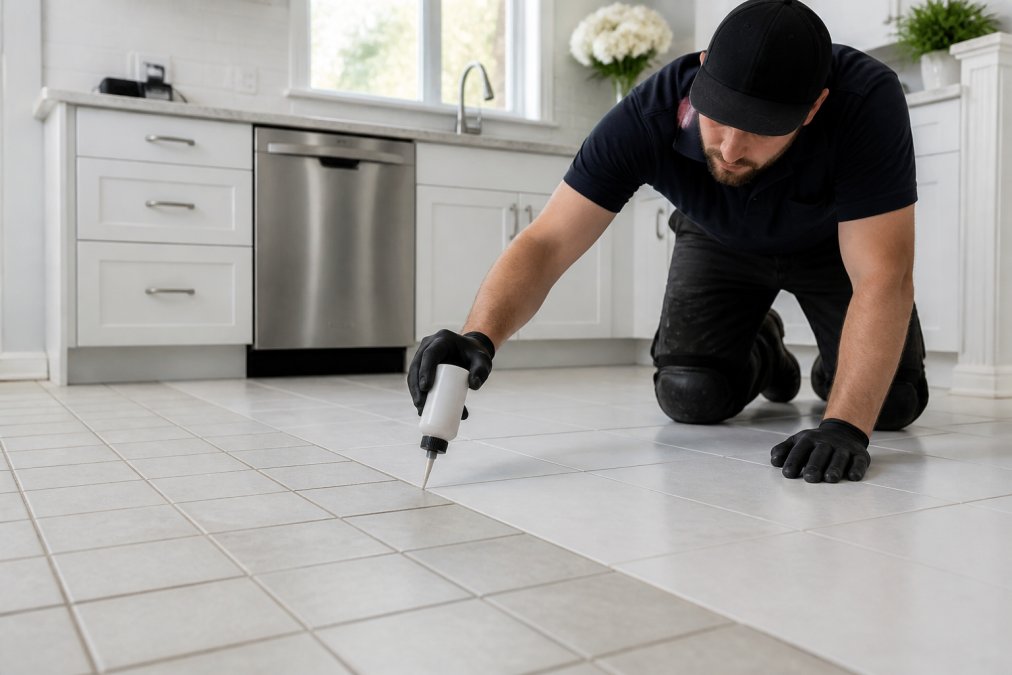
Grout recoloring applies colorant or sealer over existing grout to change appearance and protect from staining. Unlike regrouting, it doesn’t remove old grout, it’s cosmetic, not structural.
Recoloring products are water-based acrylics or polyurethane coatings that mask discoloration, restore faded grout, or change color. Many include built-in sealers that resist mold, mildew, and stains.
The process is straightforward: clean grout, apply colorant, and allow it to cure. Most homeowners complete a room in a single day. Recoloring is ideal when grout is structurally sound but visually compromised.
Regrouting vs Recoloring: Side-by-Side Comparison
When considering regrouting vs recoloring, the fundamental difference is that regrouting addresses structural problems while recoloring addresses appearance. This fundamental difference shapes every other consideration: cost, time, durability, and when each makes sense.
Here’s how they stack up:
| Factor | Regrouting | Recoloring |
|---|---|---|
| What It Fixes | Crumbling, cracked, missing grout; water damage risk | Stained, faded, or discolored grout |
| Structural Repair | Yes, restores integrity | No, cosmetic only |
| Removal Required | Yes, old grout must be extracted | No, applied over existing grout |
| Application Time | 2-5 days per room (including curing) | 4-8 hours per room |
| Skill Level | Moderate to high | Low, DIY-friendly |
| Longevity | 10-15+ years when properly sealed | 3-5 years depending on product and traffic |
| Best For | Failing grout, water damage, structural concerns | Cosmetic updates, stain removal, color changes |
Regrouting is the permanent solution but demands significant time and expense. Recoloring is the quick fix that works when grout is still structurally sound but looks tired or stained.
If you’re unsure whether your grout is structurally compromised, press on it with a screwdriver. If it crumbles or feels soft, regrouting is necessary. If it’s solid but discolored, recoloring will suffice.
Cost of Regrouting Tile Floors vs Recoloring
Regrouting Costs
Professional regrouting for a 100-square-foot bathroom involves significant labor expenses. Sanded grout costs less than unsanded but requires similar labor. Epoxy grout offers superior durability and stain resistance.
Recoloring Costs
Recoloring products cover a significant area. DIY application eliminates labor costs; professional application is often more affordable than regrouting.
5-Year Cost-of-Ownership Comparison
Over five years, recoloring requires reapplication every 3-5 years.
Regrouting involves an upfront cost plus resealing every 2-3 years. However, regrouted grout lasts 10-15 years, lowering per-year cost over a decade.
Grout Type Impact on Cost
Grout material choice affects both initial and long-term expenses:
- Sanded cement grout: Most affordable ($15-$25 per 25-lb bag), suitable for joints wider than 1/8 inch. Requires sealing every 2-3 years.
- Unsanded cement grout: Slightly more expensive ($20-$35 per bag), better for narrow joints. Same sealing requirements as sanded.
- Epoxy grout: Premium option ($40-$80 per gallon), stain-resistant and moisture-proof, requires no sealing. Higher upfront cost but lower long-term maintenance.
Water-based acrylics work on cement-based grout but may not adhere to epoxy grout. Polyurethane colorants adhere better to epoxy.
The Break-Even Point
Place An Order Online or Call 1-800-631-0716 →
For homeowners staying in their home 10+ years, regrouting breaks even around year 7-8 when you factor in repeated recoloring applications and maintenance. For those planning to move or sell within 5 years, recoloring remains the more economical choice despite its shorter lifespan.
Request a detailed quote that specifies grout type, labor hours, equipment rental, and sealing schedule. This transparency helps you calculate true 5- and 10-year costs before committing.
How Long Does Grout Colorant Last?
The longevity of grout colorant depends on product chemistry, grout type, foot traffic, moisture exposure, and maintenance, and understanding these variables helps you choose the right product for your specific conditions.
Colorant Type and Lifespan
Water-based acrylic colorants are the most common DIY option. They typically last 3-5 years in high-traffic areas like kitchens and bathrooms. Acrylics adhere well to cement-based grout (both sanded and unsanded) but are vulnerable to UV fading in sunlit spaces and moisture penetration in wet environments. In low-traffic areas like guest bathrooms or decorative tile accents, water-based colorants can last 5-7 years.
Polyurethane-based colorants offer superior durability, typically lasting 5-7 years in high-traffic areas and up to 10 years in moderate-traffic spaces. Polyurethanes form a harder, more moisture-resistant film than acrylics and resist fading better. However, they are more difficult to apply, require longer curing times (48-72 hours vs. 24 hours for acrylics), and have stronger odors during application.
Epoxy colorants are a premium option, lasting 7-10+ years even in wet environments. Epoxy forms a chemical bond with grout rather than sitting on the surface, making it highly resistant to staining, moisture, and UV fading. The trade-off is cost and application difficulty, epoxy requires precise mixing and fast application before it hardens.
Grout Type Compatibility
- Cement-based grout (sanded or unsanded): Porous and absorbs colorants readily. Water-based and polyurethane colorants adhere well. Longevity is 3-7 years depending on product type and conditions.
- Epoxy grout: Non-porous and resists colorant adhesion. Water-based acrylics often fail on epoxy grout within 1-2 years. Epoxy-specific colorants or polyurethane products designed for non-porous surfaces are required. When properly matched, longevity reaches 7-10 years.
The Sealer Factor
Environmental Factors
Location and usage patterns dramatically affect colorant lifespan:
- High-traffic kitchens and bathrooms: 3-5 years for water-based acrylics; 5-7 years for polyurethane.
- Shower enclosures and wet areas: 2-4 years for acrylics (moisture accelerates breakdown); 5-7 years for polyurethane or epoxy colorants.
- Sunlit areas (windows, skylights): UV exposure fades water-based colorants faster. Expect 2-4 years vs. 3-5 in shaded areas. Polyurethane and epoxy resist UV better.
- Low-traffic decorative areas: 5-7 years for acrylics; 7-10+ years for polyurethane or epoxy.
Regrouting Longevity for Comparison
Maintenance Extends Lifespan
Water-based colorants last 3-5 years; polyurethane lasts 5-7 years; epoxy lasts 7-10+ years. Sealing and maintenance add 2-3 years to any product. Match colorant chemistry to your grout type and environment for optimal longevity.
DIY Tile Grout Repair Kit Options and Application
DIY grout repair kits vary widely in scope and complexity. Understanding what each type offers helps you choose the right approach for your project.
Homeowners with stained or faded grout who want a quick, affordable refresh without structural concerns. DIY colorant kits work best in low-to-moderate traffic areas like guest bathrooms or decorative tile accents.
Choosing Between Regrouting and Recoloring
The decision hinges on three questions: Is your grout structurally sound? How much are you willing to spend? How long do you need the fix to last?
Choose regrouting if:
- Grout is crumbling, cracked, or missing
- Water is seeping behind tiles or pooling
- You’ve noticed mold or mildew returning quickly despite cleaning
- You plan to stay in your home 10+ years
- The tile installation is valuable and worth protecting
Choose recoloring if:
- Grout is solid but stained, faded, or discolored
- You’re selling your home and want a quick cosmetic upgrade
- Budget is a primary concern
- You’re renting or planning to move within 5 years
- You want to experiment with a new grout color without commitment
Regrouting is a permanent structural solution; recoloring is a temporary cosmetic fix. Choose based on whether your grout is failing structurally or just looking tired.
Frequently Asked Questions
Does grout recoloring actually last, or is it just a temporary cosmetic fix?
Grout recoloring with quality colorant products can last 3-5 years or longer when properly sealed and maintained. The durability depends on foot traffic, moisture exposure, and the product’s formulation. Epoxy-based and acrylic colorants tend to hold up better than basic stains. Regrouting, by contrast, provides a permanent structural solution that can last 10-15 years or more. For high-traffic areas or moisture-prone spaces like bathrooms, recoloring may require touch-ups sooner than regrouting would.
Is it more cost-effective to regrout or recolor tile grout?
Recoloring is significantly more affordable upfront. Regrouting involves labor-intensive grout removal, surface preparation, and new grout application, making it the more expensive option. However, recoloring may need refreshing every few years, while regrouting is a one-time investment that lasts much longer. For budget-conscious homeowners, recoloring offers immediate savings. For long-term value, regrouting becomes more cost-effective over time, especially in high-traffic areas where durability matters.
How do I know if my grout needs to be replaced or just recolored?
Inspect your grout for structural damage: if it’s crumbling, cracked, missing chunks, or allowing water to seep through, regrouting is necessary. If the grout is intact but discolored, stained, or simply not the color you want, recoloring works well. Press gently on the grout with a tool, if it crumbles or feels soft, the structural integrity is compromised and regrouting is required. Recoloring is a surface treatment that doesn’t address underlying grout failure, so it’s only suitable for cosmetic issues on sound grout.
Can I use a DIY tile grout repair kit if I’m not experienced with tile work?
Yes, modern DIY tile grout repair kits, including colorant products, are designed for homeowner use with minimal experience. Most colorant applications involve cleaning the grout, applying the product with a brush or applicator bottle, and allowing proper curing time. Regrouting is more labor-intensive and requires grout removal tools, mixing, and careful application, making it harder for first-timers. For recoloring, follow the product instructions carefully, test on a small area first, and ensure thorough cleaning beforehand. Professional-grade products from established brands include guidance to help DIYers achieve quality results.
What if I apply recoloring and it doesn’t match my existing grout color?
Custom color-matching services, like those offered by Grout Shield Distributors, help ensure accurate color matching before you purchase. Always request a sample or test application in a small, inconspicuous area first. Most reputable suppliers stand behind their color-matching process and offer support if there’s a mismatch. If a color doesn’t match, some products can be removed or covered with a different colorant. When ordering, provide photos of your existing grout in natural lighting to improve accuracy. Working with suppliers that offer free color-matching consultation reduces the risk of costly mistakes.
The post Regrouting vs Recoloring Tile Grout: A 2026 Guide appeared first on Grout Shield | Grout Restoration System | Grout Cleaner.