How to Recolor Grout for Home Sale
Last Updated: October 25, 2026
Quick Summary
Recolor grout home sale by applying professional-grade color sealer to clean, dry grout joints, a weekend project that refreshes tile appearance and improves buyer appeal without the cost of full regrouting. The sealer bonds with porous grout to create uniform color and resist staining through showings and inspections.
- Clean grout thoroughly with a stiff brush and warm water, then wait at least 24 hours for complete dryness before applying sealer.
- Apply color sealer in sections of 3-4 square feet with smooth strokes, wiping excess from tile while wet to prevent pooling and uneven color.
- Allow 24-72 hours for full cure before foot traffic or cleaning, depending on temperature and humidity conditions.
- Recoloring works only on structurally sound grout; cracked, crumbling, damp, or moldy grout requires repair or regrouting first.
- Start the project at least one week before listing photos to allow time for cleaning, application, curing, and touch-ups.
Table of Contents
- Why Recoloring Grout Matters When Selling
- How to Clean Grout Before Recoloring
- How to Change Grout Color: Preparation and Application
- Grout Stain vs. Grout Replacement: Making the Right Choice
- Cost to Recolor Grout Versus Professional Alternatives
- Common Mistakes to Avoid When Recoloring Grout
- Ordering Your Grout Colorant and Getting Started
- Frequently Asked Questions
Why Recoloring Grout Matters When Selling
Stained or discolored grout makes even a clean home look neglected, and when you recolor grout home sale appeal improves immediately.
Recoloring grout for home sale is one of the fastest ways to refresh tired tile without the cost and disruption of full regrouting. At Grout Shield Distributors, we’ve helped homeowners restore grout to like-new condition, a dramatic visual improvement that appeals to buyers.
A professional-grade color sealer penetrates the porous grout and bonds with it, creating a uniform appearance.
The investment is modest: a single bottle covers significant square footage, and most homeowners finish over a weekend. The payoff, an updated, well-maintained kitchen or bathroom, often justifies the effort.
How to Clean Grout Before Recoloring
You cannot apply color sealer to dirty grout.
For stubborn stains or mold, use a commercial grout cleaner or a paste of baking soda and water.
Watch out: do not use bleach on colored grout unless you are certain the grout is white.
Moisture trapped in the grout prevents the color sealer from bonding, so dry completely before the next step.
How to Change Grout Color: Preparation and Application
Gathering Your Materials and Tools
You will need:
- Grout colorant or color sealer (from Grout Shield Distributors or a similar source)
- Small brush or applicator (usually included with the product)
- Drop cloths or plastic sheeting to protect tile surfaces
Check the coverage rate on your label; color sealers cover a certain square footage per bottle, depending on joint width. Measure your space and order enough to finish without running short.
Preparing the Tile Surface and Grout Joints
Wipe the tile area with a clean, dry cloth, paying special attention to grout lines.
Tape off baseboards, walls, or any surface you want to protect. Grout colorant can stain surrounding materials, and a few minutes of taping saves hours of cleanup.
Ensure adequate ventilation: open windows and doors, and use a fan in small or poorly ventilated spaces. Good airflow helps the sealer cure evenly and speeds drying.
Applying the Color Sealer
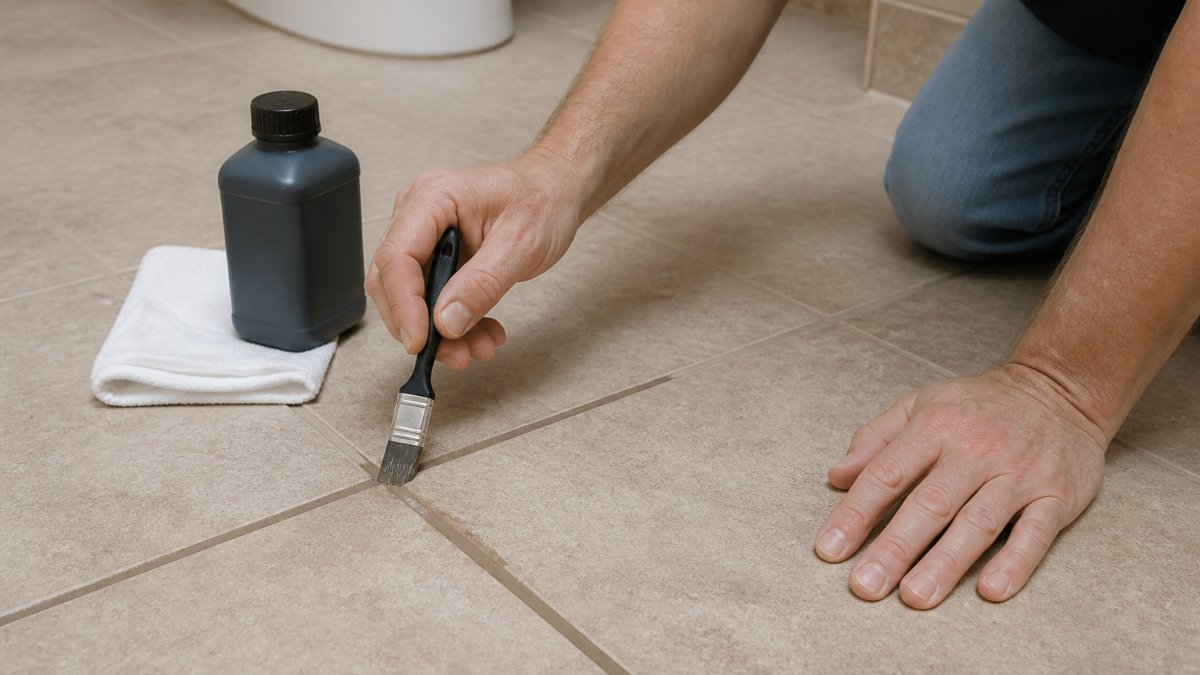
Apply the color sealer directly into the grout joints with the included brush or applicator, working in sections of about 3-4 square feet so the sealer doesn’t dry before you finish.
Use smooth, even strokes along each grout line, filling the joint completely without excess sealer on the tile. A light touch prevents pooling and uneven coloring.
As you finish each section, wipe excess sealer from the tile with a barely damp cloth while it’s still wet; once dry, removal becomes difficult. Too much water dilutes the sealer.
Drying and Curing Time
Most color sealers dry to the touch within 2-4 hours, but full cure, when the sealer reaches maximum hardness and stain resistance, takes longer. Check your label; many require 24-72 hours before the floor can be walked on or cleaned.
During curing, keep the area dry: avoid spills and don’t mop or wet-clean the grout. Moisture interrupts curing and can weaken the sealer’s bond.
Temperature and humidity affect cure time: cool, humid conditions slow drying, while warm, dry conditions speed it up. In a damp climate or cool season, add extra time.
Color sealers cure at different rates depending on conditions, so plan your timeline accordingly.
| Stage | Drying Time | Notes |
|---|---|---|
| Dry to touch | 2-4 hours | Sealer hardens on surface |
| Full cure | 24-72 hours | Maximum hardness and stain resistance |
| Before foot traffic | 24-72 hours | Check product label for exact timing |
| Cool, humid conditions | Longer than stated | Temperature and humidity slow drying |
| Warm, dry conditions | Faster than stated | Optimal conditions speed cure |
Grout Stain vs. Grout Replacement: Making the Right Choice
Recoloring works only on structurally sound grout. Before buying product or booking a pro, run a quick suitability check, the step most sellers skip and the one that determines whether your project helps or hurts the listing.
Place An Order Online or Call 1-800-631-0716 →
The pre-sale suitability checklist
Walk the room and answer these honestly:
- Is the grout solid? Scrape a joint with a plastic card or your fingernail. If it crumbles or powders, colorant will not bond, repair or regrout first.
- Are joints full and continuous? Gaps, missing sections, or recessed joints mean the grout has failed. Color sealer sits on the surface; it cannot rebuild a joint.
- Is the discoloration surface-level? Dark staining that scrubbing will not lift often signals moisture or mold below the surface. Recoloring over it traps the problem.
If every answer points to sound grout with cosmetic staining, recoloring is appropriate. If any answer raises a structural or moisture flag, address it first, inspectors will find it anyway, and a cosmetic cover-up reads as concealment.
When recoloring is not appropriate
- Cracked or loose grout: colorant will crack with it.
- Missing grout: there is nothing to seal.
- Persistently damp joints: sealer traps moisture and can worsen mold.
If you suspect a moisture or mold problem, get it inspected before listing. Disclosing a known defect is required in most states, and a fresh coat of colorant over a wet joint does not change that obligation.
Timeline: working backward from your listing date
Plan the project around photos and showings.
- Cleaning and full dry: allow at least 24 hours after cleaning, longer in humid conditions.
- Application: most DIY jobs take a weekend for a bathroom or kitchen.
- Cure: many color sealers need 24-72 hours before normal foot traffic and cleaning. Check the label.
A practical rule: start at least one week before photos, two weeks if hiring a pro or the grout needs repair. Rushing the cure is the most common way sellers end up with footprints, peeling, or patchy color in listing images.
Stain, recolor, or replace, the short version
- Stained but sound: clean, then recolor.
- Faded or mismatched but sound: recolor to unify.
- Cracked, missing, damp, or moldy: repair or regrout before any cosmetic step.
The right choice is driven by grout condition and your listing calendar, not by which option is cheapest. Sound grout plus a realistic timeline makes recoloring a smart pre-sale move; structural problems make it a liability.
Cost to Recolor Grout Versus Professional Alternatives
Sellers ask one question: does the money come back? Grout recoloring is one of the cheapest visible upgrades before listing, but the return depends on what you compare it to and how bad the grout looks now. Here’s how the numbers break down.
DIY recoloring
A bottle of professional-grade color sealer generally covers a certain square footage, depending on joint width. A typical hall bathroom or standard kitchen usually takes one to two bottles. Most homeowners spend well under a single professional service call, plus a weekend of labor. The trade-off is time and risk: a rushed DIY job with streaky joints can look worse than the stain you started with.
Professional grout cleaning
A deep-clean service removes embedded dirt but doesn’t change color. Pricing is usually per square foot, and results are temporary, heavy-traffic grout often looks dingy again within months. Cleaning suits grout that’s the right color and only lightly soiled; it doesn’t solve faded, mismatched, or permanently stained grout, which is exactly what buyers notice in listing photos.
Professional regrouting
Regrouting is the most expensive path: removing old grout, prepping joints, and installing new material means skilled labor, specialized tools, and several days when the room is unusable. For a full bathroom or kitchen, the total can rival a minor cosmetic remodel. It’s the right call only when grout is structurally failing, not merely ugly.
Professional color sealing
Hiring a pro to apply color sealer sits between cleaning and regrouting: you pay for labor and product but get a uniform color change and sealed surface without demolition. For sellers on a short timeline who don’t want to risk a DIY mistake in the most-photographed rooms, it’s often the pragmatic middle option.
How to choose based on condition and timeline
- Grout sound, lightly stained, listing in 30+ days: professional cleaning may be enough.
- Grout sound but faded, mismatched, or deeply stained: recolor, DIY if you have a free weekend, professional if the room is high-visibility.
- Grout cracked, crumbling, or missing: repair or regrout first; colorant will not fix structure.
- Listing in under two weeks: professional color sealing beats a rushed DIY job every time.
Recoloring is rarely the most expensive option and almost never the cheapest-looking one. Match the method to grout condition and your listing date, and treat the spend as cosmetic prep, not renovation, when you set expectations with your agent.
Get written quotes that specify square footage, joint width, and whether cleaning and sealing are included. Per-square-foot pricing varies widely by market and by how much prep the grout needs.
Common Mistakes to Avoid When Recoloring Grout
Even straightforward projects go wrong when you skip steps or rush. Here are the pitfalls most homeowners encounter.
Skipping ventilation. Poor airflow slows curing and traps moisture.
Walking on the grout before it cures. Footprints, dust, and skin oils interfere with the sealer.
Neglecting to protect surrounding surfaces. Grout colorant can stain walls, baseboards, and tile. Tape off adjacent areas before you start.
Ordering Your Grout Colorant and Getting Started
Recoloring grout for home sale begins with the right product and color.
If matching existing grout, bring a sample to Grout Shield Distributors or order a color sample online.
Grout Shield Distributors provides free training, promotion, and pricing assistance for contractors.
Place an order online at Grout Shield Distributors or call 1-800-631-0716.
Clean grout, proper preparation, and quality sealer create a transformation that appeals to buyers and protects your investment.
Frequently Asked Questions
Will recoloring grout actually hide deep stains and mold before selling?
Grout colorant and sealer work best on surface-level stains and discoloration. If grout is heavily stained or shows mold growth, clean it thoroughly first using appropriate cleaners. Recoloring grout for home sale improves appearance significantly when the underlying grout is clean and dry. For deep mold or structural damage, professional cleaning or regrouting may be necessary to avoid buyer concerns.
How long does recolored grout last, and will it hold up before closing?
Professional-grade grout color sealers typically last 3-5 years with proper maintenance. Most products cure fully within 24-72 hours, giving you time before showings. For a home sale closing in 2-3 months, recoloring grout is durable enough to maintain appearance through inspections and closing. Avoid heavy foot traffic or moisture exposure immediately after application to ensure proper curing.
Should I recolor grout or replace it entirely before selling my home?
Recoloring grout is faster, more affordable, and less disruptive than full regrouting. It works well for cosmetic refreshes and color changes. Replace grout only if joints are crumbling, cracked, or structurally compromised. For a home sale, recoloring restores uniform appearance and buyer appeal without the labor and cost of regrouting, making it the practical choice for most situations.
Can I apply grout colorant myself, or do I need a professional?
Recoloring grout is a DIY-friendly project for homeowners. The process involves cleaning, drying, and applying color sealer with a brush or applicator. Success depends on thorough surface preparation and following application instructions. Professional-grade products from Grout Shield are designed for both contractors and homeowners. If you’re unsure about coverage or color matching, contact our team at 1-800-631-0716 for guidance.
Preparing your home for sale means attending to details that buyers notice first. Grout discoloration ranks high on that list. With Grout Shield Distributors’s professional-grade color sealers and over 200 colors to choose from, you can refresh your tile in a weekend. Place an order online or call 1-800-631-0716 to get started. Our environmentally friendly formulas bond permanently to grout, resist staining, and maintain their appearance through inspections and beyond.

The post How to Recolor Grout for Home Sale appeared first on Grout Shield | Grout Restoration System | Grout Cleaner.